
Service customer defection is what happens when a driver who bought a car from a dealership starts taking it somewhere else for oil changes, brakes and repairs. In its November 2026 guide, coaching firm Chris Collins Inc. argues that dealers can reverse this by fixing a few specific moments in the service experience, from the first phone call to the follow-up after pickup.
This piece breaks that advice down by stage, so a service manager can see where customers slip away and what to change first.

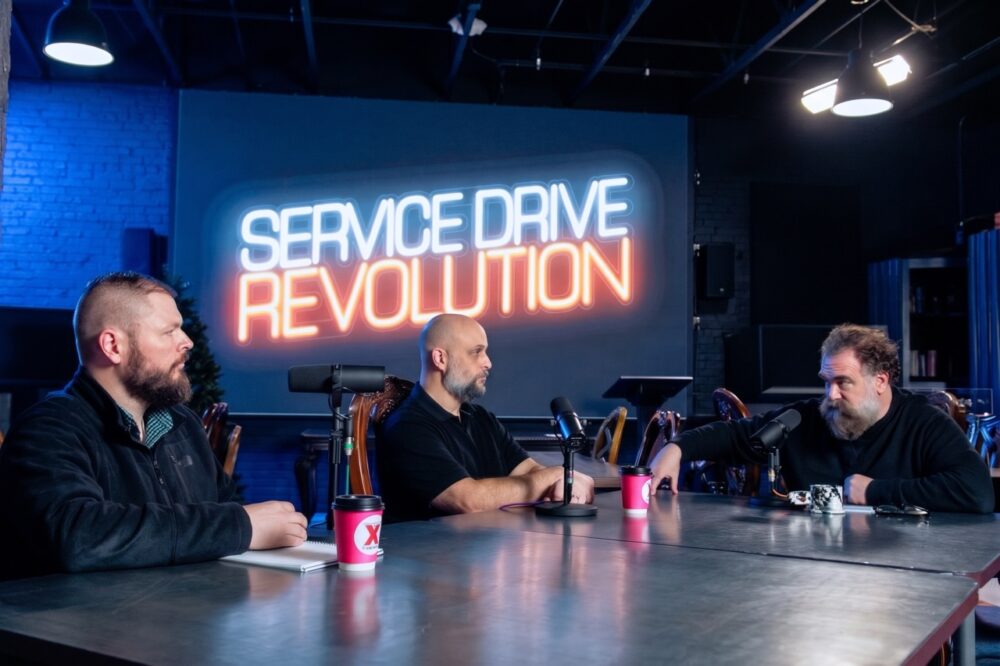
Three speakers discussing dealership service operations during a Service Drive Revolution podcast recording.
The short answer: Dealerships reduce service customer defection by earning trust before, during and after each visit. That means upfront menu pricing, digital photo and video inspections, easy online booking, loaners or pickup options, agreed status updates during repairs, a follow-up within 48 hours, and loyalty rewards and win-back offers that give drivers a reason to return.
Key takeaways
- Drivers drift to independent shops because service feels impersonal, upsells feel suspicious, logistics are a hassle, and post-warranty prices are assumed to be higher.
- The first contact matters: Chris Collins Inc. cites hold-tolerance research showing 60% of callers hang up after one minute on hold.
- Photo and video inspections, posted menu prices and repairs sorted by urgency make pricing feel honest.
- Booking, mobility options and an early service-lane introduction remove the friction that sends people elsewhere.
- Clear updates, a 48-hour follow-up, loyalty points and CRM win-back campaigns keep customers coming back.
What is service customer defection?
Service customer defection is the loss of a dealership’s service customers to independent repair shops or other providers. It usually builds slowly. A driver skips one visit, tries a corner garage for a cheap oil change, and never comes back. Each lost visit is also a lost chance to build the kind of loyalty that brings that driver back to the showroom later.
Chris Collins Inc. groups the causes into two buckets: reasons people look elsewhere in the first place, and frustrations that build up during a visit.
Stage 1: Before the visit
Why do drivers leave before they even book?
Many leave because of assumptions. According to Chris Collins Inc., once a factory warranty or free maintenance period ends, many owners simply assume the dealership costs more than an independent shop. They default to outside shops for routine jobs like oil changes and tire rotations without checking.
Access is the other early leak. Unanswered calls and long hold times create a bad first impression, and with 60% of callers giving up after a minute on hold, many simply dial a competitor.
What fixes this stage?
- Post your prices. Standard menu pricing for common maintenance, shown on a service menu or website, removes the mystery and shows you can compete with independent shops.
- Offer real-time online booking. Let customers choose their advisor and transportation option and get an instant calendar confirmation.
- Start the relationship at delivery. Walk new-car buyers through the service department, introduce the service manager, and book their first appointment, perhaps three months out, before they leave.
Stage 2: Drop-off and the repair itself
What makes customers lose trust during a repair?
Silence and surprise. Leaving a car can make people anxious, and missed completion times or no updates make it worse. Drivers also arrive wary of upsells, worried that the dealership is pushing work to hit a quota.
What fixes this stage?
- Multi-point digital inspections. Technicians capture high-resolution photos and videos of worn parts on a tablet or phone and send them to the customer’s phone, so the driver sees the problem firsthand.
- Prioritized recommendations. Sort repairs into immediate safety needs, near-term maintenance and items to monitor long term, so the customer controls non-urgent spending.
- Agreed update preferences. At drop-off, ask whether the customer wants text, phone or email updates, commit to check-in times and keep them.
- Mobility options. Loaner vehicles, rideshare vouchers and valet pickup and delivery take the logistics off the customer’s plate.
Stage 3: Pickup and the invoice
Invoice shock is one of the fastest ways to lose a customer. A final bill that differs from the estimate, or one filled with jargon and unexpected fees, makes people feel exploited. Chris Collins Inc. says advisors should translate repair codes into plain language and explain why each part matters for safety, performance or wear.
Pickup is also the moment to ask for feedback. A short two-question text survey sent right after the customer drives away lets managers spot failures while there is still time to fix them.
Stage 4: After the visit
How should dealers follow up to prevent service customer defection?
Contact the customer within 48 hours of a completed repair. The call or message confirms the car is running well and answers any invoice questions. It shows the dealership cares after the payment is done.
From there, the guide recommends two longer-term tools:
- Simple loyalty programs that award points toward maintenance, free tire rotations or discounted detailing.
- Targeted win-back campaigns that use the CRM (customer relationship management) database to find lapsed customers and reach out with personal messages, free health checks or open safety recall alerts.
Staff attitude ties all four stages together. When a complaint meets indifference, customers feel ignored and look for a business that responds.
Where to start
If you can only change one thing this month, pick the stage where you hear the most complaints. Daily routines help here; our guides to a service manager daily checklist and morning meetings that protect shop flow show how to build update times and follow-up calls into the day. For the tough conversations at the counter, try service advisor role-play.
Chris Collins Inc. also points service teams to its Service Drive Revolution (SDR) Live Academy, a live training program for service managers and advisors focused on transparent communication. You can read the original How to Reduce Service Customer Defection in 2026 guide on the Chris Collins Inc. site.
FAQ
Why do customers stop servicing their cars at dealerships?
Most leave because trust wears down. Chris Collins Inc. points to impersonal treatment, doubt about upsells, inconvenient scheduling and the belief that post-warranty service costs more. Unexpected bills and poor communication during repairs push many drivers to try an independent shop, and many do not come back.
What is the fastest way to reduce service customer defection?
Start with communication. Ask each customer how they want updates, commit to check-in times, send inspection photos, and call within 48 hours of pickup. These steps cost little, address the anxiety and invoice shock that drive people away, and show customers the dealership values them beyond the sale.
Does posting service prices really help?
Yes, according to Chris Collins Inc. Standard menu prices for common maintenance, shown on a service menu or website, remove the mystery around cost. They also counter the assumption that dealerships are always more expensive than independent shops, which is a key reason drivers leave after their warranty ends.
How can dealers win back customers who already left?
Use the CRM to find customers who have not visited in a while, then reach out with a personal message, a free vehicle health check or an alert about an open safety recall. The goal is to give them a real reason to return and a second chance to see better service.