

Direct Answer
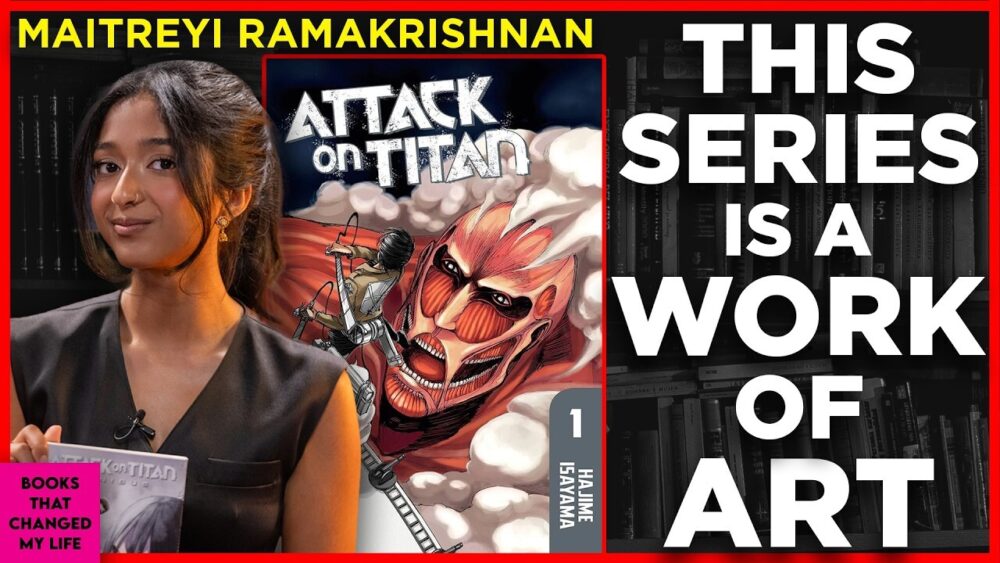
Maitreyi Ramakrishnan loves Attack on Titan because it doesn’t treat war like a cartoon. Instead of giving viewers a simple hero to root for, Hajime Isayama’s manga shows how propaganda, historical trauma, and political fear push everyday people to commit awful acts in the name of self-defense. For the Never Have I Ever star, watching the story unfold was an early lesson in why we have to question authority and challenge the ideas we inherit.

📺 Prefer watching over reading? You can stream full, uncut video conversations on the Books That Changed My Life YouTube Channel.
Key Takeaways
-
No Pure Heroes or Villains: The story constantly shifts perspective, showing how “good guys” and “bad guys” depend entirely on who is telling the story.
-
Breaking the Cycle: When groups hold onto past trauma without questioning it, former victims often end up becoming the new oppressors.
-
Neutrality Doesn’t Work: Staying silent during systemic injustice usually just helps the person in power.
-
Rooted in Real Life: Growing up in a family of union leaders and Sri Lankan Tamil genocide survivors taught Ramakrishnan to look at media with a critical eye.
About the Guest
Maitreyi Ramakrishnan is a Canadian actress best known for her breakout lead role in Netflix’s comedy series Never Have I Ever. Raised in Mississauga, Ontario, by parents who survived the Tamil genocide in Sri Lanka, she frequently speaks out on social justice, worker rights, and media representation.
About the Book
Attack on Titan (Shingeki no Kyojin), created by Hajime Isayama, starts as a simple monster story: humanity lives inside walled cities to stay safe from giant, man-eating Titans. But as childhood friends Eren Jaeger, Mikasa Ackerman, and Armin Arlert venture outside, the plot changes completely. What looked like a basic fight for survival turns into a messy story about war, state propaganda, and generational hatred.
How Her Upbringing Shaped the Way She Watches Anime
Ramakrishnan didn’t grow up in a quiet household when it came to real-world politics. She went to her first protest about the Tamil genocide when she was five years old, and by middle school, she was organizing student walkouts over local education cuts. Her father routinely picked apart news articles at the dinner table, challenging her to defend her opinions against tough counter-arguments.
When she picked up Attack on Titan in middle school, she immediately saw how closely it matched real history:
“It is about how humanity has the constant desire to oppress, to conquer, and take over people. It is a vicious cycle that we cannot get out of.” — Maitreyi Ramakrishnan
When she was 13, she initially thought Eren and humanity were obvious good guys fighting evil monsters. But as Isayama revealed the world beyond the walls, she realized no group had a clean record. Every faction was acting out of fear, past trauma, or government lies.
Lucky Sweaters, Potato Girl, and Real-World Activism
Ramakrishnan’s love for the show is also personal. Back in middle school, the very first piece of clothing she bought with her own money was an Attack on Titan sweater from Hot Topic. She still brings it to acting auditions today as a lucky charm. On screen, she felt an instant connection to Sasha Braus (“Potato Girl”) because of her humor, huge appetite, and complete lack of athletic enthusiasm during military training.
To Ramakrishnan, the biggest lesson from Attack on Titan is simple: if you want to stop real-world conflict, you have to stop assuming you’re automatically on the right side. It takes effort to confront your own biases and actually listen to people on the other side of the fence.
Structured Frameworks for Growth
If you want to handle tough conversations, build better relationships, and grow as a leader, practical frameworks can help. The I AM LEADER Book Set gives you clear, step-by-step guidance on how to set boundaries, build genuine empathy, and lead with confidence.
Explore More Discussions:
Listen to the full uncut conversation on Spotify, browse our complete archive on the main website, or find past episodes on the official podcast directory.
Frequently Asked Questions
Why does Maitreyi Ramakrishnan love Attack on Titan so much?
She loves it because it moves past simple action tropes and tackles complex topics like ethnic conflict, government propaganda, and revenge.
How did her family background affect how she viewed the show?
Her parents survived the Tamil genocide in Sri Lanka, so she grew up learning about war and injustice early on. That background made her view the show’s political themes through a real-world lens.
Which character did Ramakrishnan relate to most as a teenager?
She related most to Sasha Braus (“Potato Girl”) thanks to her comic relief, love for food, and funny struggles during army training.
Summary
Attack on Titan stays relevant because it doesn’t give viewers neat, happy answers. By showing how complicated human conflict really is, the series serves as a reminder that empathy requires effort, self-reflection, and questioning what we’re told.