
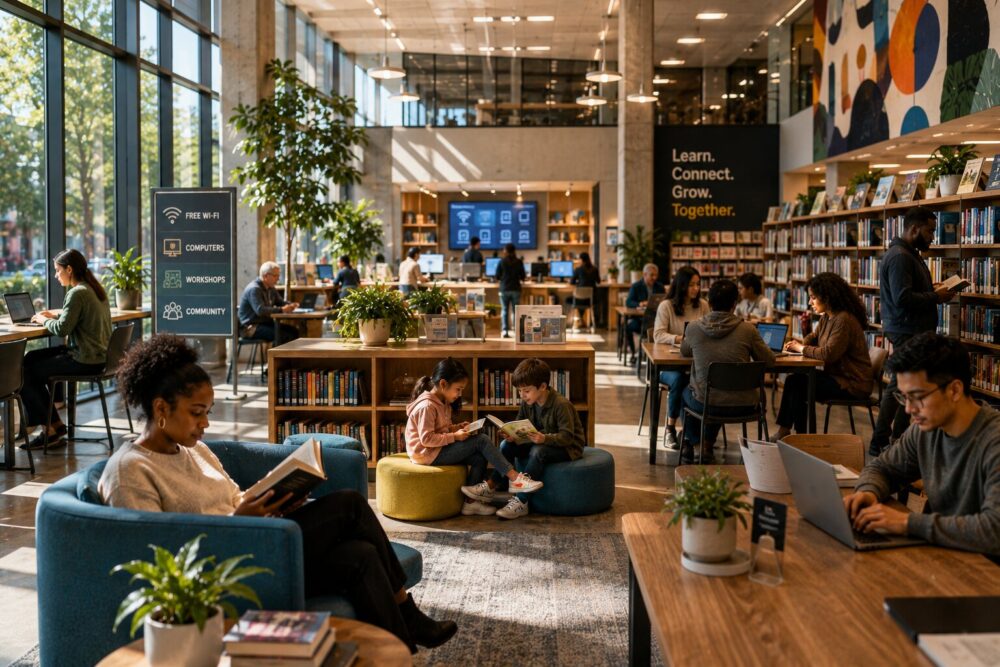

Public libraries are experiencing a surprising resurgence in 2026. In an era dominated by smartphones, streaming services, and digital information, many expected libraries to fade into the background. Instead, they are becoming more relevant than ever.
Modern libraries are no longer just quiet places filled with bookshelves. They have evolved into dynamic community centers offering technology access, educational support, coworking spaces, and social programs that serve people of all ages. Their ability to adapt has helped them remain one of the most trusted public institutions in America.
Below, we explore the biggest questions behind the renewed popularity of public libraries in 2026.
Why are public libraries becoming more popular again?
One of the biggest reasons libraries are growing in popularity is their ability to meet modern community needs. People are looking for affordable, welcoming spaces where they can work, learn, and connect with others. Libraries provide all of these things in a way that feels accessible and inclusive.
Economic factors also play a role. As living costs continue to rise, libraries offer free resources that help people save money while still accessing education, entertainment, and technology. From internet access to career workshops, libraries provide services that many communities rely on daily.
At the same time, libraries offer something increasingly rare in the digital age: a calm and trusted public space without pressure to spend money.
How have libraries changed beyond books?
Modern libraries now function as multipurpose community hubs. While books remain important, many libraries have expanded their services to include coworking areas, media labs, digital literacy classes, and even wellness programs.
Some libraries offer podcast studios, 3D printers, and creative workspaces designed for entrepreneurs and students. Others host local events, tutoring sessions, and job-search assistance.
This transformation reflects a larger shift in how communities use public spaces. Libraries are adapting to modern lifestyles while still preserving their educational mission.
Interest in libraries as cultural destinations is also growing, as highlighted in Secret Library Tour in Downtown LA’s Historic Core, which showcases how historic library spaces continue to attract modern audiences.
Why do people use libraries as coworking spaces?
Remote and hybrid work continue to influence how people choose where to work. Not everyone has access to a quiet home office or wants to spend money daily at cafés. Libraries provide a free alternative with reliable internet, comfortable seating, and fewer distractions.
For freelancers, students, and remote workers, libraries offer a productive environment without the commercial atmosphere of traditional coworking spaces. Many locations also provide meeting rooms and charging stations, making them practical for modern work needs.
This growing demand has encouraged libraries to redesign interiors with collaborative workspaces and flexible seating arrangements.
How important is technology access in modern libraries?
Technology access is now one of the most valuable services libraries provide. Despite widespread smartphone use, many people still lack reliable computers, high-speed internet, or digital skills.
Libraries help bridge this gap by offering public computers, Wi-Fi access, printing services, and tech support. Some even lend out tablets, hotspots, and laptops to community members.
According to The Institute of Museum and Library Services, libraries continue to play a vital role in supporting digital inclusion and lifelong learning across communities.
As technology becomes increasingly essential for work, education, and communication, libraries remain critical access points for millions of people.
Why are libraries still trusted by the public?
Libraries consistently rank among the most trusted public institutions because they are seen as neutral, accessible, and community-focused. Unlike many digital platforms, libraries are not driven by advertising algorithms or subscription models.
People trust libraries because they prioritize public service over profit. Librarians are viewed as reliable guides who help people find information without pushing products or agendas.
The lasting influence of books on personal growth is reflected in The Razor’s Edge: The Book That Shaped Actor Charlie Cox, which explores how literature can shape perspective and identity long after the final page.
This trust is especially valuable in a time when misinformation and online overload have made it harder for people to identify credible sources.
How do social programs help libraries stay relevant?
Social programming has become a major part of modern library services. Many libraries host events that bring communities together, including book clubs, language classes, financial literacy workshops, and youth programs.
These events create opportunities for connection in a world where many people feel increasingly isolated. Libraries offer safe and inclusive spaces where individuals can interact, learn, and participate in local culture.
Research from Pew Research Center has highlighted how Americans continue to value libraries for both educational and community support services, especially as social needs evolve.
Are younger generations using libraries too?
Yes, younger generations are helping drive the library revival. Students and young professionals often use libraries for study spaces, internet access, and collaborative work environments.
Social media has also contributed to renewed interest in reading culture and library visits. Platforms focused on books and lifestyle trends have made libraries feel modern and culturally relevant again.
Additionally, many younger users appreciate the sustainability and affordability of borrowing instead of constantly buying new books or subscriptions.
What challenges do libraries still face in 2026?
Despite growing popularity, libraries still face funding challenges and increasing demands for services. Many institutions must balance traditional collections with investments in technology and community programming.
Staffing shortages and budget limitations can also make it difficult for libraries to expand services as quickly as communities need them. However, strong public support continues to help many libraries secure funding and partnerships.
Their adaptability remains one of their greatest strengths.
FAQ Section
Do people still borrow physical books from libraries?
Yes. While digital borrowing has grown, physical books remain highly popular among readers of all ages.
Are library memberships usually free?
Most public libraries offer free membership to local residents, giving access to books, digital resources, and community programs.
Can libraries help with job searches?
Absolutely. Many libraries provide résumé assistance, career workshops, and internet access for applications and interviews.
Do libraries only serve students and readers?
No. Libraries now serve a broad range of people, including remote workers, families, entrepreneurs, and senior citizens.
Conclusion
Public libraries are proving that they can thrive even in a highly digital world. By evolving into community-centered spaces that support technology access, education, and social connection, they remain deeply relevant in 2026.
Their continued popularity reflects something important: people still value trusted public spaces that encourage learning, creativity, and community without barriers. In many ways, libraries are not just surviving the digital age—they are redefining their role within it.